
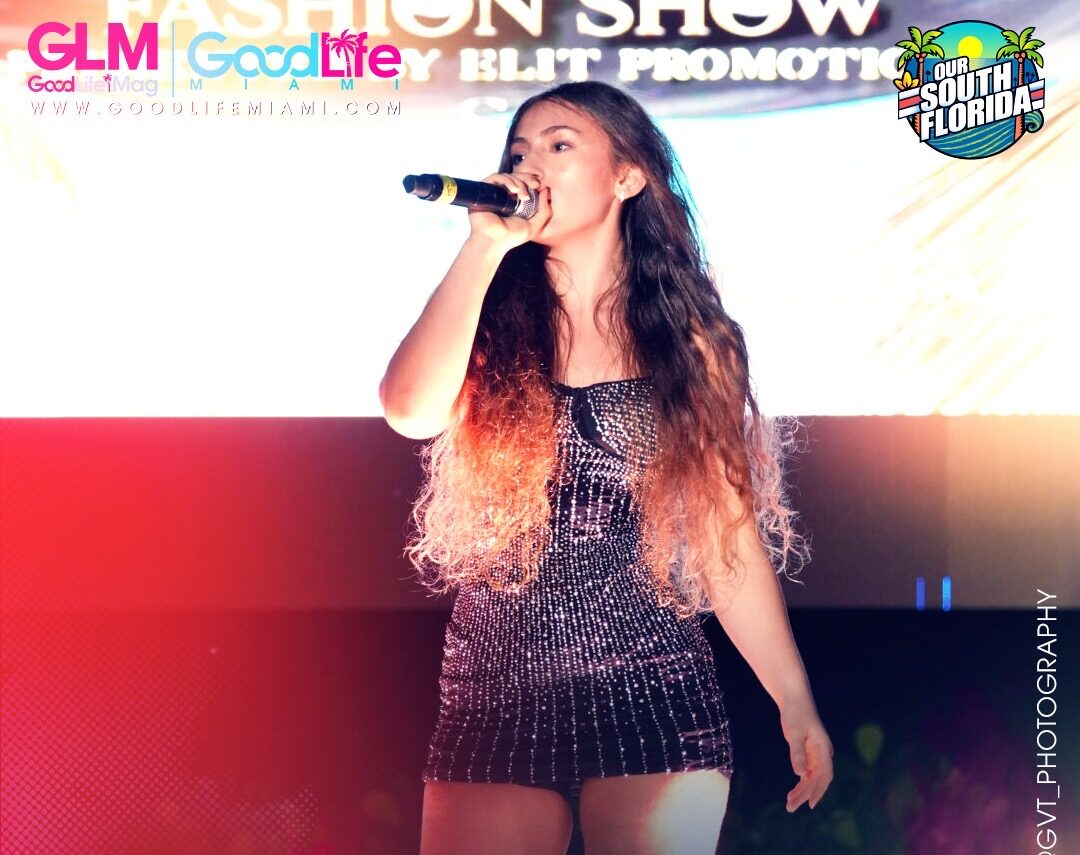
The multifaceted model and recording artist talks sonic vulnerability, taking the director’s chair, and why consistency in the studio is a full-time commitment.
“Music has always felt natural to me. It lets me completely disconnect from everything else and just focus on the sound.”
— Raynora
There is an undeniable, ethereal current running through everything Raynora touches. Whether she is commanding a high-fashion frame or layering intricate vocal harmonies in a dimly lit studio, her creative presence is impossible to ignore. Stepping away from the rigid expectations of the traditional industry, she has carved out an alternative enclave in Miami—one defined by cinematic moods, cool tones, and absolute sonic control.
In an environment that frequently favors the loud and hyper-energetic, Raynora opts for depth. Her work is a masterful blending of vulnerability and sharp artistic direction, proving that an independent artist can build an empire entirely on her own terms. We sat down with her to explore the mechanics behind her vision, the reality of the grind, and the raw inspiration driving her latest music.
The Interview

You navigate the creative world both as a fashion-forward model and a recording artist. How would you describe your signature sound, and how does your visual aesthetic inform the music you create?
I’d describe my sound as light, airy, emotional, and a little nostalgic. I like music that’s easy to listen to and relaxing, but still makes you feel something through the lyrics, chords, energy, and dynamics. I want every part of the song to help convey emotion.
As for my visual aesthetic, I’ve always been drawn to cooler colors like purple, blue, and soft pinks. When I listen to my music, those are the colors I picture and feel. That’s the atmosphere I want to reflect in everything I create.
When you are writing a song, what is the core message or energy you want your audience to feel when your vocals hit the track?
I want people to feel understood. My favorite songs are the ones that put feelings into words that I couldn’t explain myself, and I hope my music can do that for other people. I want someone to hear one of my songs and think, “That’s exactly how I feel.” More than anything, I want my music to become something people connect memories to—the kind of song that, years later, instantly takes them back to a certain moment in their life.
Your modeling career heavily relies on presence, while your music relies on sound. Which part of your creative process allows you to express your most authentic self?
Definitely music. I’ve always loved singing, even before I ever thought about sharing it with anyone. It’s one of the only things I’ve consistently loved doing my entire life. I love the feeling of finally figuring out the perfect verse or layering harmonies together until everything clicks. Music has always felt natural to me, whether that’s singing, writing, listening, studying it, or even playing the cello. Playing cello is actually one of the most personal things I do because it’s something I mostly keep for myself. It lets me completely disconnect from everything.
Your latest single represents an evolution in your artistic journey. What was the exact inspiration behind this specific track?
The song was inspired by that feeling you get when you start romanticizing someone’s potential. You’re imagining all the possibilities, hoping they’re feeling the same way, and wondering if this could really happen the way you want it to. It’s that exciting moment before they disappoint you, where you’re thinking, “Maybe this time it’ll be different.” Creatively, I think this song helped me discover the sound I connect with the most. Compared to my first release, it feels much closer to the type of music I personally listen to, love singing, and genuinely enjoy making.
How did you approach the creative direction and visual roll-out for this project to ensure it matched the track’s mood?
I wanted everything to feel cooler and dreamier rather than bright and energetic. The song has a calm, almost floating feeling, so I wanted the visuals to match that atmosphere.
What is your absolute favorite lyric or sonic moment from the new single?
One of my favorite lyrics is: “All these guys don’t want me, I don’t entertain all the games that they wanna play.” It’s especially relevant to my life right now because I usually don’t give guys the time of day if they’re just playing games or aren’t serious.
My favorite musical moment is actually the ending. The beat completely changes, and you hear rain and thunder in the background while my vocals almost float behind everything. I’ve always loved rainy weather, so adding that atmosphere felt really natural. It creates this peaceful, emotional ending that perfectly captures the mood of the song.
How has living and working within the unique tempo of the Miami scene shaped your perspective as an emerging artist?
Miami pushed me completely out of my comfort zone. It’s such an unpredictable city; you never really know what’s going to happen, so you’re constantly adapting. I actually ended up loving that because it taught me how to stay flexible in a fast-paced environment, which is something you really need in the entertainment industry. It made me much more confident performing, no matter what stage setup I have. Now I can just focus on singing instead of worrying about everything else.
Was it difficult to transition from modeling—where you bring someone else’s vision to life—into holding full creative control in the studio?
Honestly, not really. I’ve always seen modeling and music as two completely different creative outlets. Modeling is about helping bring someone else’s vision to life, while music is where I get to create my own vision. Modeling has definitely helped with my confidence, energy, and stage presence, but I’ve always been the type of person who likes to be in charge of what I’m creating instead of being told what to do. That’s one of the reasons I love music so much—I’m the one making the creative decisions, and everything happens on my own terms and timeline. The only place they really overlap for me is in visuals and music videos.
What is the biggest misconception people have about the day-to-day work required to build an independent music career?
I think a lot of people treat music like it’s just a hobby until someone becomes successful. But if someone is in medical school, nobody says, “Being a doctor is just your hobby until you graduate.” They recognize that you’re building toward a career. I think music is similar in that way; you spend years writing, practicing, networking, recording, and performing before people see the results. Writing, recording, networking, planning releases, creating content, rehearsing—it’s a full-time commitment. Another misconception is that success is impossible or only happens to other people. Every successful artist started somewhere. The work starts long before anyone notices it.
Words to Live By: Raynora’s Elements
On the Reality of the Craft: “Nobody believes it’s a real career until they see the results, but the work starts long before anyone notices it.”
On Creative Independence: “I’m the one making the creative decisions, and everything happens on my own terms and timeline.”
On Atmosphere: Cool tones, rain, and unexpected beat switches that create a safe space for authentic.
“I hope people remember me as someone who made them feel understood. I want to feel normal, genuine, and approachable, like someone whose music helped people through different moments in their lives.” — Raynora
Production Credits
Feature: Raynora @raynora.p)
Photography @gvt_photography
Press & Editorial Production: GLM Magazine Studio